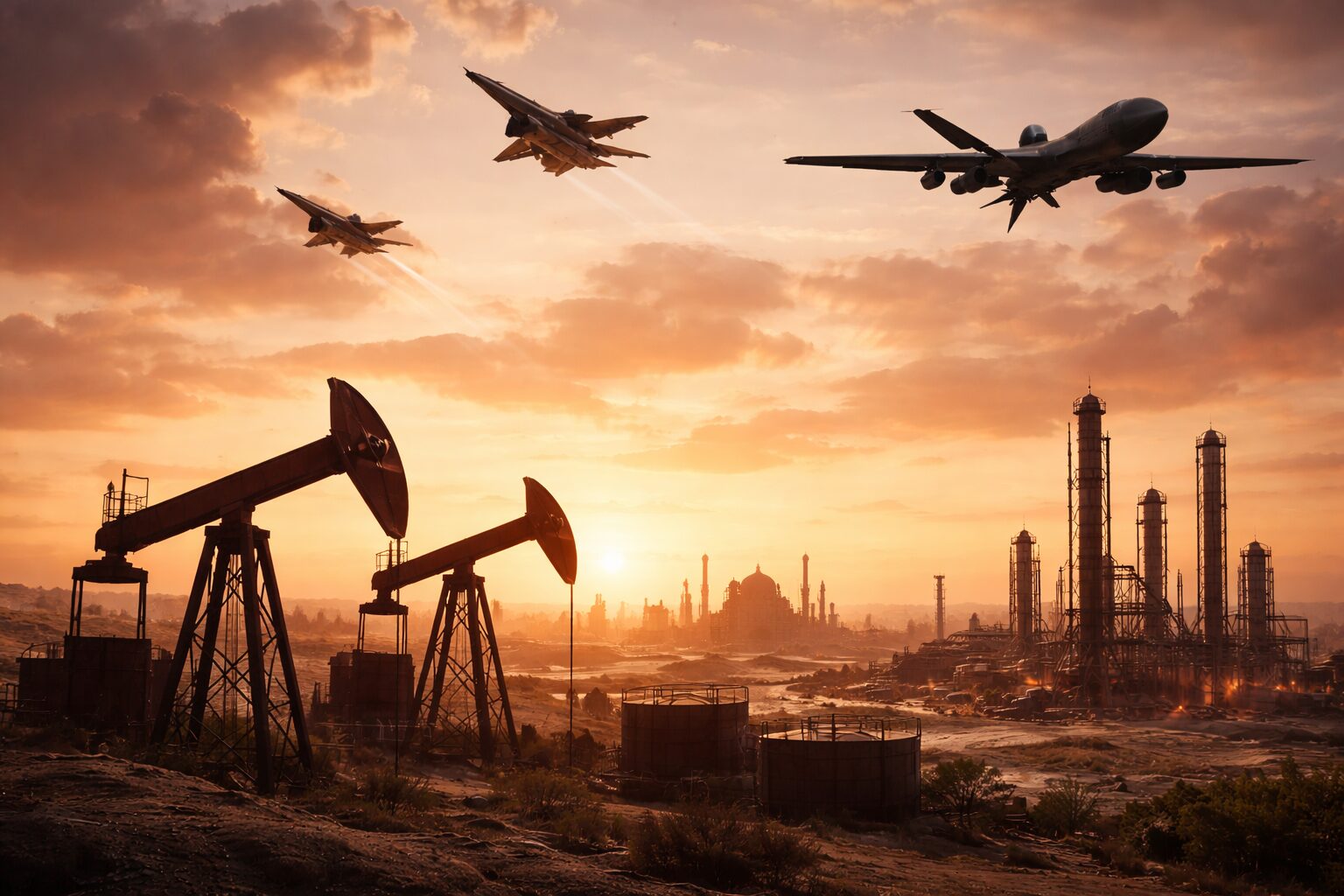
The Middle-East Conflict

Modern | Dynamic | Honest
Middle East Escalation: What It Means for Markets and Your Portfolio
The US and Israeli strikes on Iranian military targets over the weekend mark a significant escalation in a conflict that has effectively been ongoing since October 2023. While tensions have flared intermittently across the region, this latest development represents a more direct confrontation and has understandably unsettled global markets.
There have already been spillover effects, including renewed exchanges involving Hezbollah in Lebanon. However, as with previous flare ups in the region, many analysts expect the immediate military exchanges to be relatively short lived. The broader risk lies not necessarily in the initial strikes, but in the potential knock on consequences.
Why energy markets matter
Iran sits in a strategically critical position. It remains a potential threat to commercial shipping through the Strait of Hormuz, a key artery for global oil supply. It also has the capacity to disrupt oil and gas infrastructure in neighbouring Saudi Arabia and the UAE.
In response, energy markets have moved quickly. Brent crude has risen to around 80 dollars per barrel, up from the low 70s just days earlier. Natural gas prices have also increased.
Short term price spikes are common during geopolitical events. What investors will be watching more closely are longer dated energy contracts. These provide a clearer signal as to whether markets expect sustained disruption that could feed through into global growth and inflation. At this stage, it is too early to draw firm conclusions.
How markets have reacted
Market behaviour has been broadly in line with expectations during periods of heightened uncertainty:
• Oil and gas prices higher
• Gold firmer as investors seek perceived safe havens
• The US dollar modestly stronger
• Equity markets softer, particularly in Asia
• Government bond yields largely stable, with some regional variation
In short, we have seen a classic risk off reaction. That is not unusual. Markets dislike uncertainty more than almost anything else.
However, it is important to keep perspective. While headlines can be dramatic, market pricing often adjusts rapidly and then stabilises as investors assess the longer term implications rather than the immediate shock.
The geopolitical dimension
Iran has strategic relationships with both Russia and China. Russia’s ability to influence events is constrained by its ongoing war in Ukraine. China’s position is more nuanced.
While Chinese and Russian officials have criticised the strikes, neither has signalled any material support beyond rhetoric. For China in particular, maintaining economic engagement with Western economies remains a priority. Escalating involvement would not necessarily serve its broader strategic interests.
As ever, geopolitics is complex and fluid. Markets will spend the coming days attempting to assess whether this remains a contained regional escalation or develops into something more prolonged.
Are markets prepared for higher risk?
Interestingly, equity markets are arguably better positioned for a higher risk environment than they were a month ago. Valuations are less stretched and investor sentiment had already moderated.
That does not remove downside risk. If the situation worsens materially, markets would likely fall further. However, it does mean that we are not entering this period of uncertainty from a position of excessive optimism.
It is also worth noting that, in recent years, markets have experienced repeated geopolitical and political shocks. Whether that reflects growing resilience or simple desensitisation is open to debate. What history shows, however, is that most geopolitical events create short term volatility rather than permanent damage to long term investment returns.
The longer term view
Engineering a stable political outcome in Iran, should that be the direction of travel, would be neither quick nor straightforward. Investors will be watching carefully for signs of de escalation or broader regional involvement.
For long term investors, the key question is not what happens over the next few days, but whether the conflict materially alters global growth prospects, inflation dynamics or corporate earnings over the coming years. At present, that remains uncertain.
As always, diversification, appropriate asset allocation and disciplined portfolio construction remain the foundations of managing through uncertain times.
We are monitoring developments closely and will continue to review positioning where appropriate. If you would like to talk through how current events relate to your own portfolio, or simply sense check your strategy, feel free to get in touch with one of the team. A calm conversation is often far more valuable than reacting to headlines.
For further information or to arrange a meeting to discuss your future investment plans and goals, please get in touch.
Important
This article is for information purposes only – should not be perceived as financial advice. We recommend you should always speak to a financial adviser before making any investment decisions.
Please note, past performance is not a reliable indicator to future returns. Your investment may fall as well as rise, and you may not get back what you put in.